Newborn Bath Time 101: A Gentle, Low-Stress Guide for Real Life (0-3 Months)
Bathing a newborn sounds like it should be simple. Water + baby + gentle soap = clean baby, right?
And then you actually do it, and suddenly you’re holding a tiny, slippery little eel who is both adorable and shockingly wiggly, while you’re trying to remember if the water is too hot, too cold, or just right… and also whether it’s normal for a baby to look offended by air.
If you’re nervous about newborn bath time, you’re in very good company. Most parents don’t feel like pros on day one. This guide walks you through everything you need – safely, calmly, and without spending a fortune on “must-have” gadgets you’ll use twice.
Let’s make bath time feel less like a stressful event and more like a simple, gentle routine you can actually manage (even when you’re tired).
Why Newborn Bath Time Feels Intimidating
(and why you’re not doing anything wrong)
Newborns are:
- tiny
- slippery
- not great at holding their heads up (understatement of the year)
- sensitive to temperature, noise, and being slightly inconvenienced
And you are:
- learning a brand-new skill
- possibly sleep-deprived
- holding a living, wiggling burrito that you love more than anything
So yes, it can feel intense. But the good news is: newborn bath time doesn’t have to be frequent, fancy, or complicated.
How Often Should You Bathe a Newborn?
This is the question every new parent asks, usually while staring at a baby who smells like milk and determination. In the newborn stage (0-3 months), most babies only need a bath 2–3 times per week. Daily baths can dry out sensitive skin, especially if your baby is prone to eczema or dryness.
You can clean the important areas daily (face, neck folds, hands, diaper area) without doing a full bath every day.
Signs your baby might need an extra bath
- a big diaper blowout (we’ve all been there)
- spit-up in hair/neck folds
- heat/sweat build-up in creases
- a “mystery smell” you can’t ignore
First Bath for Newborn: Sponge Bath vs Tub Bath
Until your baby’s umbilical cord stump falls off and heals (often within the first couple of weeks), many healthcare providers recommend sponge baths instead of submerging baby in water.
Sponge bath newborn (the early-days approach)
Sponge baths are gentle, quick, and great when you’re still figuring things out. You’ll basically:
- keep baby wrapped and warm
- wash one area at a time with a soft cloth
- avoid soaking the cord stump area
Tub bath newborn (once cord stump is healed)
Once the stump is gone and healed, you can move to a shallow tub bath. The key: baby doesn’t need much water. You’re not filling a pool. You’re creating a tiny warm puddle that says, “Welcome to spa life”.
Best Time for Newborn Bath Time
There’s no universal perfect time, but there is a “least chaotic” time. Choose a time when:
- baby is calm (not starving)
- you’re not rushing
- the house is warm
- you can focus without interruptions
Many families like bath time before bedtime because it can become a calming routine. But if evenings are a fuss-fest in your house, do it midday. Your baby won’t judge your scheduling skills.
Newborn Bath Temperature and Safety Basics
Baby bath temperature: Aim for warm, not hot. Around 37°C (98–100°F) is commonly recommended. If you don’t have a bath thermometer:
- use your wrist or elbow (more sensitive than hands)
- water should feel comfortably warm, like a pleasant bath and not a hot tub
Safety rule that matters most: Always keep one hand on your baby. Newborns are wiggly, and baths are slippery. One hand stays on baby. Always.
Step-by-Step: How to Bathe a Newborn
(Simple, Calm, and Actually Doable)
Step 1: Set up everything first (because you can’t pause mid-bath)
Before you undress baby, have:
- towel open and ready
- clean diaper and clothes laid out
- washcloth and gentle soap nearby
- warm water prepared
This is the #1 stress reducer.
Step 2: Keep baby warm
Babies get chilly fast. Keep a warm room and consider:
- washing one body part at a time
- keeping a towel over baby’s torso while you wash
Step 3: Wash face first (no soap needed)
Use a damp washcloth:
- wipe eyes from inner corner outward (use a clean part of the cloth each time)
- wipe around mouth and cheeks
Step 4: Hair and scalp (1-2 times per week is enough)
Use a tiny amount of gentle baby wash if needed. Support the head and keep water away from face.
Step 5: Body folds (the hidden milk storage compartments)
Neck folds, armpits, wrist rolls, thigh rolls. Clean gently. These are common places for milk, lint, and general newborn mystery debris.
Step 6: Diaper area last
Always last. Save your energy.
Step 7: Dry and moisturize (quickly, gently)
Pat dry, don’t rub. If your baby has dry skin, a fragrance-free baby moisturizer can help.
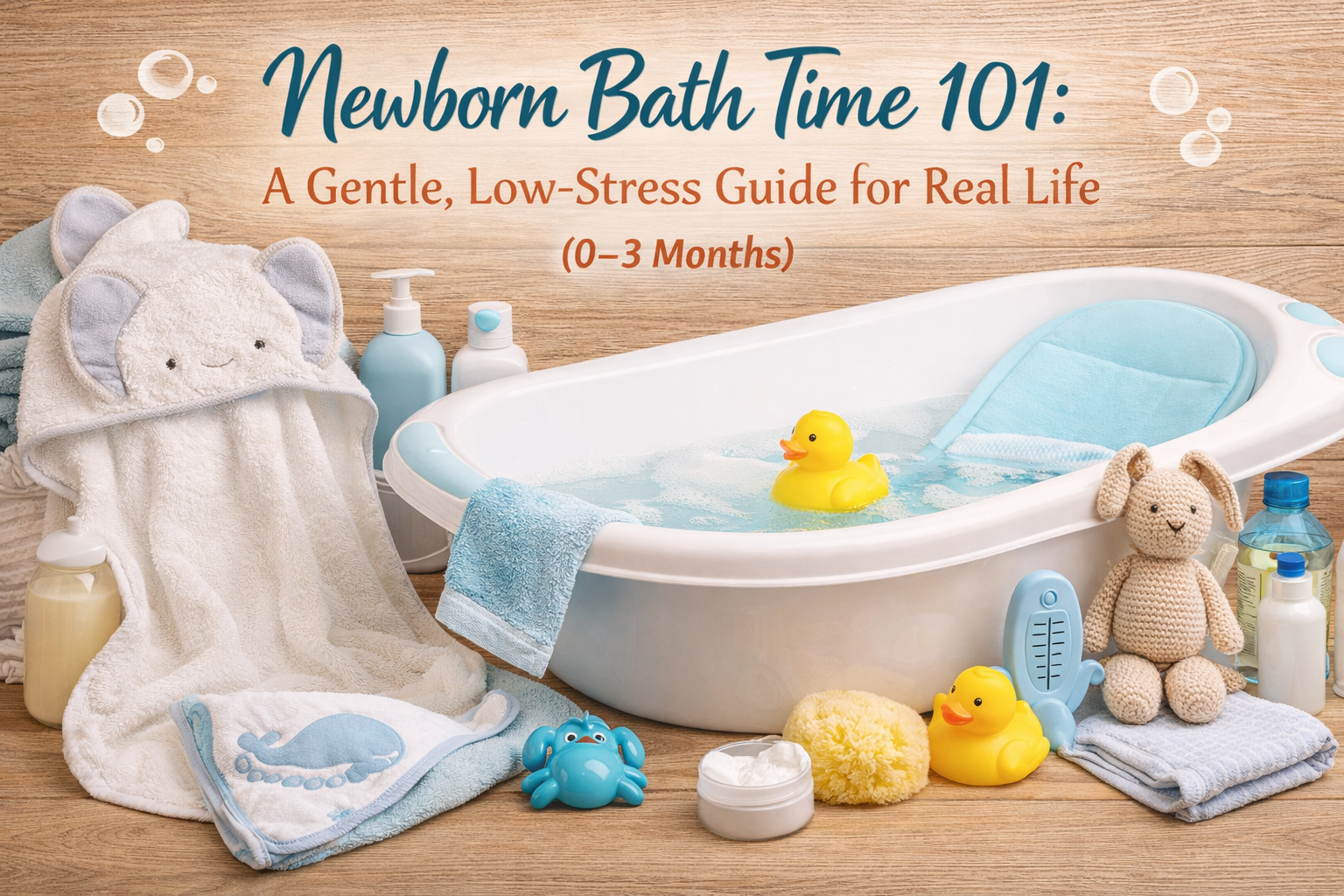
Newborn Bath Essentials:
Must-Haves, Nice-to-Haves, and Skip-for-Now
Let’s talk about what you actually need. Because newborn bath aisles are designed to make you feel like you should own a baby-sized luxury spa.
✅Must-Haves (practical, used often)
These are the basics that make newborn bath time safer and easier.
- Baby bathtub or sink insert (optional but very helpful): A newborn-specific tub supports baby and keeps things secure.
- Soft washcloths (a few): You’ll use these constantly for baths and also for… everything else.
- Hooded towel (or any soft towel): Hooded towels are cute, but any soft towel works. The goal is warmth.
- Gentle fragrance-free baby wash: One gentle cleanser is enough. You don’t need a 12-step skincare routine for a newborn.
- Clean diaper + clothes ready: Not glamorous, but essential. Post-bath diapers need to happen fast.
⭐Nice-to-Haves (helpful but not required)
These can make bath time smoother, especially if you bathe baby often.
- Bath thermometer: Reassuring and simple, especially for nervous first baths.
- Rinse cup: A small cup helps rinse without splashing baby’s face.
- Baby lotion or moisturizer (fragrance-free): Helpful if baby has dry skin, especially in winter.
- Soft baby brush/comb (for cradle cap): Not needed for all babies, but useful if cradle cap appears.
- Non-slip bath mat (for your knees / stability): More for you than baby. Your knees deserve support too.
⛔Skip-for-Now (save money + reduce clutter)
These are the items that are often marketed as essentials, but most families can wait (or skip entirely).
- Baby bath seat (for older babies): Not for newborns. This is more relevant once baby can sit with support.
- Bubble bath: Not recommended for newborns and can irritate sensitive skin.
- Strongly scented products: Newborn skin is sensitive. Fragrance can irritate, especially for eczema-prone babies.
- Too many products (shampoo, wash, conditioner, massage oil, etc.): You can do newborn bath time with one gentle cleanser.
- Fancy electric gadgets: Warmers, spa sprayers, and complicated tools often become clutter. Simple wins.
Newborn Bath Routine Tips (to make it calmer)
- Keep it short: A newborn bath can be 5 to 10 minutes. Longer isn’t better.
- Warm room = happier baby: If baby screams the moment they’re undressed, it’s often temperature-related.
- Talk to your baby: Your voice is calming. Even if you’re saying, “Okay buddy, we’re doing the neck folds now, don’t sue me”.
- Don’t force daily baths: If baths stress baby out, do fewer and keep it simple.
Common Newborn Bath Time Mistakes
(that everyone makes once)
- Not prepping everything first (then you’re dripping and searching for a diaper)
- Water too deep (newborns need shallow water)
- Overusing soap (can dry out skin)
- Rubbing skin dry (pat instead)
- Bathing too often (2–3 times a week is usually enough)


FAQs: Newborn Bath Time
How often should you bathe a newborn?
Most newborns only need a bath 2 – 3 times per week. Clean face/neck/diaper area daily as needed.
When can a newborn have a real bath?
Many families do sponge baths until the umbilical stump falls off and heals. After that, shallow tub baths are typically fine.
What is the best newborn bath temperature?
Warm water, often around 37°C (98-100°F). Use your wrist/elbow test or a bath thermometer.
What soap is best for newborn bath time?
A gentle, fragrance-free baby wash is usually best, especially for sensitive skin.
Should I use lotion after newborn bath?
Only if needed. If baby’s skin is dry, a fragrance-free moisturizer can help.
What if my newborn hates baths?
It’s common. Try warmer room, shorter bath, towel over baby during bath, sponge baths for a while. Many babies get more comfortable with time.
A Gentle Reminder
(Because You’re Probably Doing Better Than You Think)
If newborn bath time feels awkward right now, it’s not because you’re bad at it. It’s because you’re new at it and you’re learning while holding a tiny human who is both slippery and passionately expressive. Keep it simple. Keep it warm. Keep it short. A “successful” newborn bath is not one where everything is perfect. It’s one where your baby is safe, reasonably clean, and you don’t feel like you ran a marathon afterward.