Newborn Health & Safety Essentials (0-3 Months): What You Actually Need to Feel Prepared
If you’ve ever wandered into the baby health aisle while pregnant (or freshly postpartum), you know the vibe: everything is labeled “essential”, half the products look like tiny medical devices, and you suddenly feel like you should earn a certification just to clip a newborn nail.
Take a breath. You don’t need a home hospital. You need a small set of basics that helps you handle the most common newborn things like congestion, minor fevers, and the shocking fact that newborn nails are basically miniature ninja blades.
This guide covers newborn health & safety essentials (0–3 months) in a calm, practical way, with must-haves, nice-to-haves, and skip-for-now items, plus safe sleep reminders and FAQs. Think of it as your “prepared, not panicked” checklist.
Why a Newborn Health & Safety Checklist Matters
(Without Going Overboard)
Newborns are resilient, but they’re also brand-new humans with:
- sensitive skin
- tiny airways
- unpredictable hiccups/snuffles/grunts
- a talent for producing bodily fluids at inconvenient moments
Most of what you’ll deal with early on is normal and manageable. Having a simple health and safety kit means you’re not scrambling at midnight searching for a thermometer while whispering “Please don’t be a fever, please don’t be a fever”. Prepared is peaceful.
The Most Common Newborn “Health Things”
Parents Face (0-3 Months)
Here are the usual suspects:
- Congestion/snuffles (tiny noses get blocked easily)
- Gas and spit-up (tiny tummies are learning)
- Diaper rash (common, fixable)
- Dry skin/cradle cap (common, usually temporary)
- Nail scratches (because nails are sharp and babies flail like tiny conductors)
- Temperature worries (every parent eventually becomes a forehead-touch expert)
This post focuses on essentials for these everyday situations plus general safety basics.
Newborn Safety Basics You Should Know
(The “Big Rock” Stuff)
Before we talk products, let’s cover the safety basics that matter most.
- Safe sleep essentials (the non-negotiables): This is the safety category where “simple” is best. Babies don’t need a cozy-looking crib setup. They need a safe one.
- Baby sleeps on their back for naps and nighttime.
- Use a firm, flat sleep surface (bassinet/crib/pack ’n play).
- Keep sleep space clear: no pillows, loose blankets, stuffed toys, or bumpers.
- Dress baby in appropriate layers (sleepers + swaddle/sleep sack if used).
- Car seat basics (another big non-negotiable)
- Use a properly installed car seat, appropriate for your baby’s size.
- Harness should be snug.
- Avoid bulky jackets under harness straps. Use thin layers + blanket over straps after buckling.
- Babyproofing: do you need to do it right away?: Not the full “cover every outlet in the house” version. Newborns aren’t crawling yet. But early planning helps.
- check smoke/CO detectors
- secure pets around baby
- keep small objects away from changing/feeding areas
- set up a safe place to put baby down (bassinet/crib)
Newborn Health & Safety Essentials:
Must-Haves, Nice-to-Haves, Skip-for-Now
Let’s build a newborn health and safety kit that’s useful, not excessive.
✅ Must-Haves (0-3 Months)
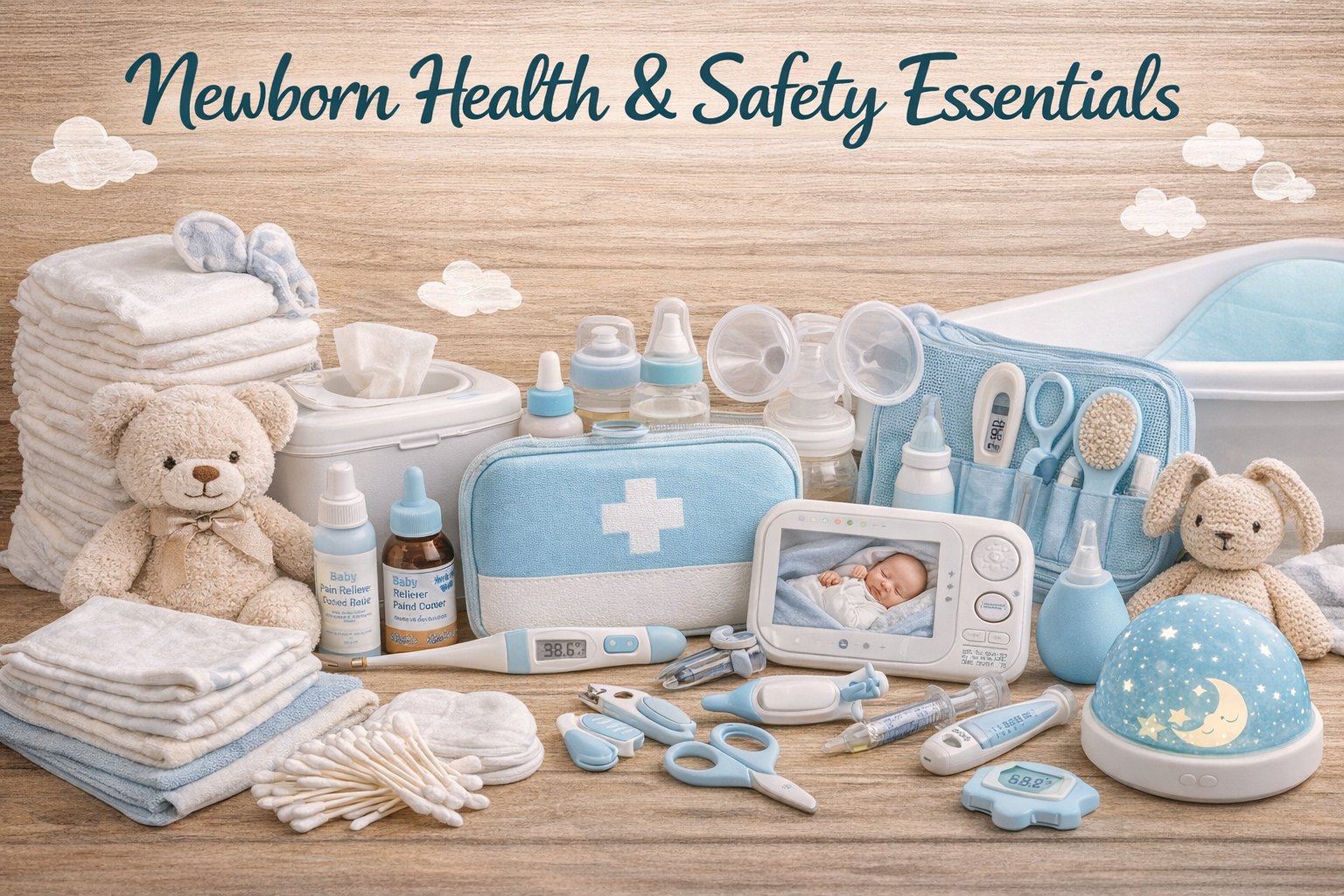
- Digital thermometer (the true MVP): If you buy one health item, make it a reliable thermometer. When you need it, you want it immediately.
Why it matters: Newborn fever concerns should be taken seriously, and knowing baby’s temperature helps you decide what to do next.- Tip: Read the product instructions and keep it in the same spot so you’re not searching at 2 AM.
- Nasal aspirator (for newborn congestion): Newborns get congested easily, and since they’re mostly nose breathers, a stuffy nose can make feeding and sleep harder. Options include:
- bulb syringe
- manual suction aspirator
- other newborn-safe suction tools
- Tip: Pair it with saline drops (below) for easier clearing.
- Saline drops or saline spray (newborn-safe): Saline helps loosen mucus so suction is more effective (and less dramatic for everyone involved). This combo is gold: saline + aspirator.
- Baby nail file or newborn nail clippers: Newborn nails are sharp and grow fast. Scratches happen.
- Pro tip: Many parents find a nail file easier than clippers in the early weeks. Do it when baby is sleepy or feeding, because awake nail trimming is a high-stakes sport.
- Gentle baby brush/comb (for cradle cap + grooming): Not every baby gets cradle cap, but many do. A soft brush is helpful for gentle scalp care.
- Fragrance-free baby moisturizer (optional but common “must”): Newborn skin can be dry and flaky, especially in winter. A simple, fragrance-free moisturizer can help. If your baby’s skin is fine, you may not need this daily but having one gentle option is useful.
- Basic first aid supplies (simple, not a pharmacy): You don’t need a huge kit, but a few basics are handy. Keep it minimal.
- sterile gauze pads
- baby-safe bandages (for later)
- baby-safe thermometer covers (if your thermometer uses them)
- A safe sleep setup (counts as health & safety): Because safe sleep is one of the biggest safety essentials:
- firm mattress + fitted sheet
- sleep sacks/swaddles as appropriate
- no loose bedding
⭐ Nice-to-Haves (Helpful, Not Required)
- Humidifier (great in dry seasons): If your home is dry (winter heating) or baby gets congested often, a cool-mist humidifier can be helpful.
- Baby medicine pacifier / syringe dispenser (for later): Not necessarily needed immediately, but handy if you ever need to give liquid medicine in the future.
Important: Always use medicine only as directed by a healthcare professional. - Cradle cap care extras (only if needed): If cradle cap appears, you may appreciate:
- a cradle cap comb
- an extra-soft scrubber
- Baby-proofing basics (early prep): Again, newborns won’t crawl yet, but you can start with:
- outlet covers (if you like)
- cabinet locks (later)
- furniture anchor straps (great to do early)
- A “go-to” baby care bag for appointments: A small pouch with:
- thermometer
- saline
- aspirator
- nail file
- diaper cream
⛔ Skip-for-Now (Save money + avoid clutter)
- Giant medicine cabinet stockpile: It’s tempting to buy everything “just in case”, but many medications should be chosen based on your baby’s needs and with medical guidance, especially in the newborn stage.
- Fancy wellness gadgets with one purpose: If it’s expensive and only solves a very rare problem, skip for now. You can always buy later if needed.
- Strongly scented skincare and bath products: Newborn skin is sensitive. Fragrance can irritate, especially if eczema runs in the family.
- Earwax removal tools: Generally unnecessary and easy to misuse. Keep it simple: wipe outer ear gently with a soft cloth.
- Overcomplicated “newborn spa” kits: Your baby does not need a 9-step skincare routine. They need warmth, gentle products, and a parent who isn’t stressed by a cluttered counter.
How to Take a Newborn Temperature (Simple, Calm, Practical)
Temperature worry is common, especially in the first months. A few tips that help:
- Know where your thermometer is.
- Read the instructions once ahead of time (future you will be grateful).
- If you’re concerned, don’t rely only on “feels warm”. Check the temperature.
Important: If you suspect a fever in a newborn, follow your healthcare provider’s guidance and local recommendations. When in doubt, seek medical advice promptly.
Newborn Congestion: What Helps Most
Newborn congestion is super common and often not serious, but it can be annoying for feeding and sleep.
Simple congestion routine:
- Saline drops
- Wait a moment
- Suction gently with aspirator
- Humidifier if air is dry
- Keep baby slightly upright after feeds (as advised)
If baby shows signs of breathing difficulty, poor feeding, or seems unwell, seek medical advice.
Newborn Grooming Essentials (Because Tiny Nails Are Wild)
| Nail Care | Skin Care | Umbilical cord care |
|---|---|---|
| File often Clip carefully (if you choose clippers) Do it when baby is calm/sleepy | Keep products minimal Fragrance-free is usually best Moisturize if skin is dry | Follow your healthcare provider’s instructions. Usually, keep it clean and dry, and let it fall off naturally. |


A Simple Newborn Health & Safety Checklist (Copy/Paste Friendly)
Must-haves
- digital thermometer
- saline drops/spray
- nasal aspirator
- baby nail file/clippers
- soft baby brush/comb
- fragrance-free moisturizer (optional but helpful)
- basic first aid supplies (gauze, etc.)
- safe sleep setup (firm mattress + fitted sheet, clear sleep space)
Nice-to-haves
- cool-mist humidifier
- cradle cap tools (only if needed)
- babyproofing basics (early prep)
- travel pouch for appointments
Skip-for-now
- huge medicine stockpile
- fancy single-purpose gadgets
- strongly scented skincare
- earwax removal tools
- complicated “spa” kits
FAQs: Newborn Health & Safety Essentials
What are the most important newborn health and safety essentials?
A reliable thermometer, nasal care items (saline + aspirator), nail care tools, and a safe sleep setup cover most needs in the first 0-3 months.
Do I need a newborn first aid kit?
You don’t need a huge one. A small kit with basics (thermometer, gauze etc.) is usually enough.
What helps newborn congestion the most?
Saline drops and a gentle nasal aspirator are often the most effective basics. A humidifier can help if the air is dry.
How do I safely trim newborn nails?
Many parents prefer a nail file early on. Trim or file when baby is sleepy or feeding, and go slowly.
Should I buy baby medicine before baby is sick?
It’s usually better to avoid stocking up on medications in the newborn stage unless advised by your healthcare provider.
When should I start babyproofing?
Full babyproofing is more important before baby becomes mobile, but you can start early with smoke/CO detectors and anchoring furniture.
The Most Important Safety “Essential“ (That You Already Have)
Your attention. Your instincts. Your willingness to ask questions when something feels off. You don’t need every gadget in the baby aisle to keep your newborn safe. You need a few reliable basics and permission to keep things simple.