Why Won’t My Newborn Sleep?
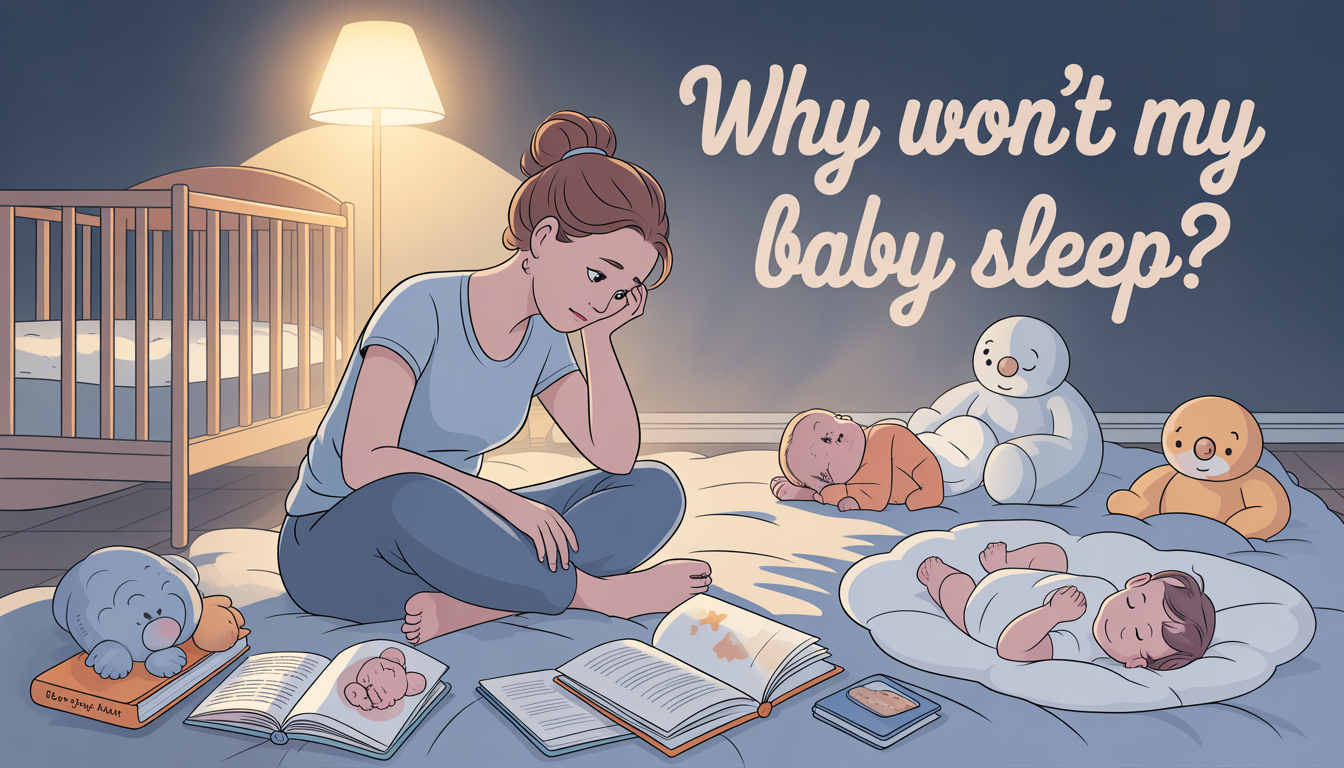
If you’re reading this with one eye open while your baby snoozes peacefully on your chest (but refuses to sleep anywhere else), welcome. You have officially joined the club where “a good night” means you only Googled three things at 3:00 a.m.
Newborn sleep can feel like a rigged game:
- Your baby sleeps… just not when you want them to.
- They doze off instantly… until you try to put them down.
- They wake up every 37 minutes like they’re punching a tiny time clock.
And the worst part? Everyone’s advice sounds like it came from a different planet: “Just put them down drowsy but awake!”
Cool. I also plan to become fluent in dolphin.
Let’s make this simple, comforting, and actually useful. This post is for you if:
- you’re exhausted,
- your baby won’t sleep “normally”
- and you’d like to stop blaming yourself for something that is, in most cases, completely normal newborn behavior.
First: You’re Not Doing It Wrong (Newborn Sleep Is Weird on Purpose)
Here’s the big truth: newborns are not designed to sleep like adults. They’re designed to wake frequently because they’re tiny, growing fast, and their stomachs are basically the size of a walnut. In the early weeks (roughly 0 to 12 weeks), it’s common for babies to:
- sleep in short chunks
- wake to eat often (including cluster feeding)
- startle themselves awake (hello, Moro reflex)
- mix up day and night
- want contact naps (because you’re warm, familiar, and smell like home)
So when you say “my baby won’t sleep”, what you usually mean is:
- “My baby won’t sleep long enough“
- “My baby won’t sleep in the bassinet“
- “My baby only sleeps on me, and I’m afraid I’ll never pee alone again”
- “My baby wakes up the second I set them down”
All of these are extremely common. Annoying, yes. A sign you’re failing? No.
The 7 Most Common Newborn Sleep Problems (and what’s actually going on)
1. “My baby only sleeps on me”
Translation: Your baby believes you are the only acceptable mattress.
What’s going on: Newborns are wired to seek closeness. You’re warm. You smell familiar. Your heartbeat and breathing are soothing. Your baby spent months listening to that soundtrack from the inside.
What helps (without being harsh):
- Lean into contact naps strategically: If baby only naps on you right now, you can still make it work with safe planning (and help).
- Use the “rescue nap“: If baby is melting down, a contact nap can prevent overtired chaos.
- Try one bassinet nap per day (not all naps, not every nap, just one “practice rep”).
- Tag-team if you can: Let someone else hold baby for one nap so you can sleep too.
Contact naps don’t “spoil” babies. They’re a phase, usually a temporary one. You’re not creating a lifelong habit of “must be held forever”. You’re meeting a newborn need.
2. “My baby wakes up the second I put them down”
Ah, the classic “crib is lava” phenomenon.
Common reasons:
- baby isn’t in deep sleep yet
- startle reflex
- bassinet feels cold compared to your arms
- baby has gas/reflux discomfort
- baby wakes during a light sleep cycle and panics because you’re not there
What helps: the transfer that actually works
- Wait 10 to 20 minutes after baby falls asleep before transferring. (Early sleep is light. Deeper sleep comes a little later.)
- Lower baby slowly: butt first, then head. (Head-first can trigger the startle reflex.)
- Keep your hands on baby for 30-60 seconds after placing them down. Think “gentle landing” not “drop and run”.
- If baby startles, don’t immediately scoop. Try firm hands, shushing or tiny jiggle in place first.
Bonus: If you use a swaddle/sleep sack (age-appropriate), transfers often get easier because baby isn’t flailing awake like a tiny windmill.
3. “My baby sleeps all day and is wide awake all night”
This is super common early on. Newborn circadian rhythms are still cooking.
What helps: the gentle day/night reset
- Daytime = bright and normal: Open curtains. Keep normal house sounds. Don’t tiptoe.
- Nighttime = boring and dark: Dim light. Quiet voices. No party vibes.
- Create a “morning anchor”: First feed of the day in daylight with curtains open helps set their internal clock.
- Avoid long daytime marathon naps: Once baby is a bit older (your clinician can guide you depending on weight gain and age).
This isn’t instant. Think: gradual improvements, not overnight miracles.
4. “My baby fights sleep like they’re negotiating a union contract”
This is often overtiredness. Overtired babies can look like:
- yawning… then suddenly screaming
- rubbing eyes
- red eyebrows (the “angry little forehead” look)
- short naps (20 to 40 mins) and constant wake-ups
- bedtime battles
What helps
- Start a short wind-down before they hit meltdown mode.
- Keep it simple and repeatable:
- diaper change
- swaddle/sack
- feed
- burp
- white noise
- cuddle
- transfer
- Don’t be afraid to “save the day” with a carrier/stroller/contact nap if needed. Preventing overtiredness often improves nighttime sleep.
5. “My baby wakes up every 45 minutes”
This can be normal because babies cycle through lighter sleep frequently. But if it’s relentless, it’s worth checking the usual suspects:
Common culprits
- hunger / cluster feeding
- discomfort (gas, reflux)
- too cold / too hot
- overtiredness
- inconsistent sleep environment cues
Small changes that help
- Try a brief pause (15 to 30 seconds) before intervening. Some babies resettle.
- Keep the sleep cues consistent: dark, sound machine, same routine.
- Make sure baby is comfortable: burp breaks, gentle upright time after feeds if refluxy.
6. “My baby sleeps fine… until 2 a.m”
That “second half of the night” can be lighter sleep, hunger, habit cues. Babies often wake and want the same conditions they had when they fell asleep.
What helps
- If baby falls asleep feeding (very normal), try a gentle burp and a calm transfer.
- Keep lights dim and stimulation low.
- Build one consistent cue (sound machine, short phrase, gentle pat) so sleep feels predictable.
7. “I can’t sleep even when the baby sleeps”
This one is heartbreakingly common. You’re exhausted, but your body is stuck in alert mode.
What helps (in real life)
- If you can’t sleep, rest your body anyway: lie down, close your eyes, reduce input.
- Ask someone to take the baby for even 30 to 60 minutes so you can truly switch off.
- Limit doom-scrolling at 2 a.m. (it lies to you and makes everything feel worse).
- If anxiety feels persistent or intense, talk to a professional. Postpartum anxiety is common and treatable.
The “Is This Normal?” Newborn Sleep Reality Check
Here’s what’s usually normal early on:
- frequent waking
- short naps
- contact naps
- inconsistent stretches
- feeding often at night
- needing help to settle
What matters most:
- baby is feeding well (per clinician guidance)
- baby has normal diapers
- baby is gaining weight appropriately
- you’re following safe sleep practices
- and you’re getting support where possible
The Newborn Sleep Troubleshooting Checklist (for when your brain is a soup)
When baby won’t settle, run this list:
- Hungry? (yes, even if you just fed them)
- Burp needed?
- Wet/dirty diaper?
- Too hot / too cold?
- Gas / reflux discomfort?
- Overtired? (escalating fussiness)
- Overstimulated? (bright light, lots of handling)
- Sleep environment consistent? (dark, sound, safe surface)
- Need comfort? (valid need, not a bad habit)
- Transfer timing: wait for deeper sleep and try again
This sounds simple, but in the moment it’s powerful because it gives you a path instead of panic.
A Simple Bedtime Routine
You don’t need a fancy routine. You need a repeatable one.
Try this:
- diaper change
- swaddle/sleep sack (age-appropriate)
- feed
- burp
- sound machine and dim light
- cuddle
- transfer
The magic isn’t the steps. It’s the repetition. Your baby starts learning: “Oh, this means sleep”
The Parent Survival Plan (Because You Matter Too)
Let’s be honest: newborn sleep problems are also parent survival problems.
Sleep in shifts if possible: Even a 3 to 4 hour uninterrupted block can make you feel human again. If you have a partner/support person (Parent A: 9 p.m to 1 a.m, Parent B: 1 a.m to 5 a.m). Adjust for your reality. The point is protected sleep.
Lower your standards with pride: This is not your “host a dinner party” era. This is your “eat toast standing up” era. Both are valid.
Make a “night station”: Put these near your feeding spot – water bottle, snack, burp cloth, wipes/diaper, spare sleeper, lip balm (why are lips so dry postpartum??). Fewer trips across the house = less wakefulness = better chance you fall back asleep.
Ask for help in a specific way: Not “can you help?”. Try: “Can you hold the baby from 1 to 3 pm so I can nap?”. Specific requests get yeses.
Give yourself permission to tap out safely: If you’re overwhelmed: place baby in a safe spot and take a few minutes to breathe. A regulated parent is the goal, not a perfect one.
FAQs
How many hours should a newborn sleep?
Newborns often sleep a lot over 24 hours, but it’s broken into chunks. Total sleep can look “high” while you still feel wrecked because it’s fragmented.
When do babies start sleeping longer stretches?
Some start stretching sleep as they grow, but timing varies a lot. Improvements often come gradually, think weeks, not nights.
Is it normal that my baby only sleeps when held?
Yes, especially in early weeks. It’s common and usually temporary. You can work on transfers and sleep cues without treating comfort like a bad habit.
Why does my baby wake up when I put them down?
Usually: lighter sleep, startle reflex, temperature difference, or discomfort. Transfer timing and consistent cues often help.
Is white noise safe?
Used responsibly (reasonable volume, not too close), many families find it helpful. Follow product guidance and your clinician’s advice.
When should I stop swaddling?
Stop when baby shows signs of rolling or per your clinician’s guidance. Transitioning to a sleep sack is common.
Final “Experienced Parent” Pep Talk
Some babies sleep like angels early and then suddenly don’t. Some babies are chaos early and slowly get better. A lot of this is temperament. So if you’re doing “everything right” and your baby still wakes often? That’s not failure. That’s a baby being a baby. You are not behind. You are not messing this up. You are tired. And you’re learning your specific baby one night at a time.
Want our Sleep & Nursery essentials?
We keep our recommended must-haves, nice-to-haves, and skip-for-now items organized here: Sleep & Nursery Essentials (0–3 Months).