Newborn Diapering 101: A Real-Life Guide to Diapers, Wipes, Blowouts, and Staying Sane (0-3 Months)
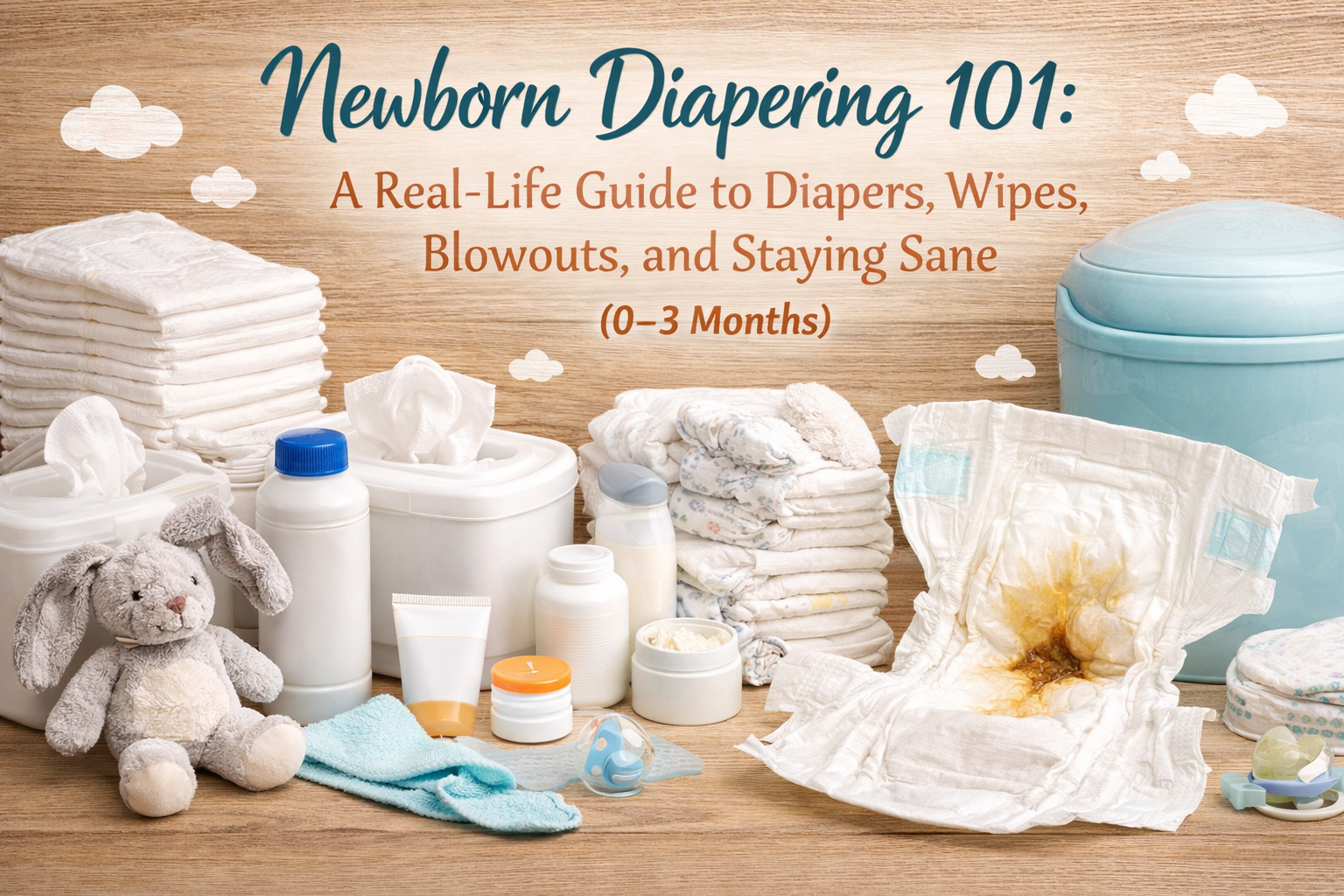
Newborn diapering is one of those things no one truly understands until they’re doing it… at 2:38 AM… half-awake… with a baby who is somehow both sleepy and performing Olympic-level wiggles. And then there’s the poop. Newborn poop is a universe of its own. It changes colors, textures, frequency, and mood like it has a personal mission to keep you guessing. Some diapers are “easy”, some diapers are… events.
If you’re nervous, overwhelmed, or simply wondering how on earth you’re supposed to do this 8-12 times a day, good news: you’ll get the hang of it quickly. Even better news: you don’t need a diapering setup that looks like a mini pharmacy.
This guide will walk you through newborn diapering and changing with a calm, practical approach plus a realistic essentials list (must-haves, nice-to-haves, skip-for-now), blowout prevention tips, diaper rash basics, and FAQs.
Newborn Diapering: What to Expect in the First 0–3 Months
Averages vary, but many newborns go through 8-12 diapers per day in the early weeks, sometimes more if they’re cluster-feeding or have frequent poops. This can feel like a lot (because it is). But diapering becomes one of those skills you develop fast like unlocking a hidden parenting level.
Why newborns need so many diaper changes?
- they pee often (tiny bladders, big ambition)
- they poop frequently at first (especially breastfed babies)
- they have sensitive skin (staying dry matters)
How Often Should You Change a Newborn Diaper?
Short answer: often.
Long answer: change whenever it’s wet/dirty, and definitely after poop.
A practical diaper change rhythm
- Poop diapers: change ASAP (helps prevent diaper rash)
- Wet diapers: every 2-3 hours, or at feeds (common routine)
At night, you can sometimes stretch a bit longer if:
- baby is sleeping well
- it’s just pee
- baby isn’t prone to diaper rash (But if they’re sensitive, frequent changes are worth it.)
Newborn Diaper Sizes: How to Know What Fits
Most diapers follow something like:
- Newborn size: up to ~10 lbs (varies by brand)
- Size 1: ~8 to 14 lbs (varies by brand)
Some babies outgrow newborn size quickly. Some wear it for weeks. The trick is fit, not the number.
| Signs the diaper is too small | Signs the diaper is too big |
|---|---|
| Frequent leaks Red marks on thighs/waist Tabs barely close Blowouts that feel personal | Gaps around legs Leaks even when diaper isn’t full Diaper looks saggy and doesn’t seal |
Step-by-Step: How to Change a Newborn Diaper
(Without Stress)
This is the simple, repeatable method that works for most families.
Step 1: Set up your diapering area (before you open the diaper)
Have within arm’s reach:
- clean diaper
- wipes (or cloth + warm water)
- diaper cream (if needed)
- a burp cloth or small towel (trust me)
- diaper disposal option
Safety note: Never leave baby unattended on a changing table, even for a second. Newborns surprise you with movement.
Step 2: Open the diaper and do the “surprise assessment”
Newborn diapering is 50% routine and 50% plot twists. If there’s poop: wipe front to back. If it’s a boy: consider placing a wipe or cloth over the penis to prevent surprise pee fountains. (Yes, that’s a real thing. No, you did not imagine it. It’s science).
Step 3: Clean thoroughly (but gently)
Wipe front to back, paying attention to:
- skin folds
- creases
- where poop likes to hide for fun
For baby girls: wipe front to back, gently, and don’t worry about perfectly removing every tiny bit in one go. Gentle cleaning is the goal.
Step 4: Let the skin dry for a few seconds
This matters more than people think. Moisture + friction = diaper rash party. You can:
- wait a moment
- pat dry with a soft cloth
- use a dry wipe
Step 5: Apply diaper cream (only if needed)
You don’t need cream every change unless:
- baby is rash-prone
- poop is frequent
- skin looks irritated
Think of cream as a skin barrier, not a daily requirement for every baby.
Step 6: Put on the clean diaper (snug, not tight)
- diaper should sit just under the belly button stump (or fold down in the first days)
- tabs should be even
- make sure leg ruffles are pulled out (these help prevent leaks)
Pro tip: If you’re having lots of leaks, check the ruffles first. Those little frills are not decorative. They are functional engineering.
Newborn Poop: What’s Normal
(and Why It Changes So Much)
Newborn poop changes dramatically in the first weeks.
Common newborn poop stages
- Meconium: dark, sticky, tar-like (first days)
- Transitional: greenish/brownish (as feeding establishes)
- Breastfed: yellow, seedy, frequent (often)
- Formula-fed: more tan/brown, thicker, sometimes less frequent
Frequency ranges widely. Some babies poop every diaper. Some poop once a day. Some skip a day. The key is whether baby seems comfortable and feeding well. If you’re ever concerned about poop color (especially white, black after the newborn stage, or red), or baby seems unwell, check with a healthcare provider.
Blowout Prevention: How to Reduce the “Up-the-Back” Incidents
Blowouts happen. Sometimes even with the best diaper in the world. But you can reduce them.
Tips to prevent diaper blowouts
- size up if diaper is consistently leaking
- ensure ruffles are pulled out
- fasten snugly around the waist
- for newborns, fold down the top if cord stump is present (some diapers have a notch)
- consider changing more frequently during poop-heavy phases
Reality check: Some blowouts are simply your baby’s way of humbling you. Consider them character-building.
Diaper Rash Newborn: Prevention and Basics
Diaper rash is common. It doesn’t mean you’re doing something wrong. Newborn skin is delicate and sensitive.
How to prevent diaper rash
- change diapers frequently
- dry the skin before putting on a new diaper
- use barrier cream when needed (especially for poop-heavy days)
- consider diaper-free time (even 5 minutes helps)
When diaper cream helps most
- early redness
- frequent poops
- sensitive skin
- after antibiotics (sometimes increases rash risk)
If rash is severe, looks blistered, persists, or baby seems very uncomfortable, check with a healthcare professional.
Newborn Diapering Essentials:
Must-Haves, Nice-to-Haves, Skip-for-Now
Let’s talk about what you actually need. The diaper aisle is… persuasive. But your home does not need to look like a diaper warehouse.
✅ Must-Haves (you’ll use these daily)
- Diapers (obviously, but let’s be specific): Start with one small pack Newborn, one pack of Size 1, because your baby will decide their size schedule, not you.
- Wipes (or cloths + warm water): Look for fragrance-free, sensitive-skin friendly. Some babies do better with plain warm water + soft cloths in the early weeks.
- Changing pad or safe changing surface: A dedicated pad helps contain mess and protect surfaces.
- Diaper cream (barrier cream): Not for every change for every baby, but essential to have on hand.
- Diaper pail option (or small trash can with lid + bags): You don’t need anything fancy. You just need “closeable”.
- Hand sanitizer or easy hand-washing access: Because you’ll be changing diapers constantly and hygiene matters.
⭐ Nice-to-Haves (helpful, not required)
- Diaper caddy (portable organizer): Useful if you have multiple changing spots.
- Disposable changing pad liners: Great for blowouts or travel days.
- Wipe dispenser or warmer (dispenser yes, warmer optional): A dispenser can make wipes easier. Warmers are preference-based.
- Extra covers for changing pad: Because laundry happens. Frequently.
- Diaper rash spray (optional): Some parents love sprays for quick barrier application without rubbing.
- Diaper pail with odor control (optional): Nice if smell bothers you, but not mandatory.
⛔ Skip-for-Now (save money + space)
- Giant stockpile of one diaper brand/size: Babies grow quickly and some brands fit differently. Start small, then commit.
- Too many specialty diaper gadgets: Most diapering is solved by: diaper, wipes, cream, and a safe surface.
- Wipe warmers (for most families): Some babies love warm wipes, many don’t care. It’s optional, not essential.
- Fancy diaper bag refills and systems: Nice, but not required. Regular bags work.
- Overbuying “newborn-only” items: Many items work for months; don’t limit yourself to short-lived gear.
Diaper Changing Station Setup (Simple + Efficient)
A good setup is one that keeps essentials within reach, has a clean surface, has a plan for dirty diapers and is easy to restock. If you want a second station (living room, bedroom), a diaper caddy works great.
Minimal setup checklist
- diapers
- wipes
- cream
- changing pad
- spare onesie + burp cloth nearby (for surprise mess)
Night time Newborn Diaper Changes
(The “Don’t Wake the Beast” Edition)
Night changes are about keeping baby calm:
- use dim light
- keep wipes ready
- avoid cold air exposure
- do the change quickly, then feed/soothe back to sleep
If baby is rash-prone, change wet diapers more frequently at night. If baby sleeps well and skin is fine, you may be able to change less often when it’s only pee.


FAQs: Diapering & Changing
How often should I change a newborn diaper?
Most newborns need changes every 2-3 hours and immediately after poop.
How many diapers does a newborn use per day?
Often 8 to 12 per day in the first weeks, sometimes more.
What size diapers should I buy for a newborn?
Start with a small pack of Newborn and one pack of Size 1. Fit varies by brand and baby.
How do I prevent diaper blowouts?
Check fit, pull out leg ruffles, fasten snugly, change frequently, and size up if leaks are constant.
Do I need diaper cream at every change?
Not always. Use it when skin looks irritated, during frequent poops, or if baby is rash-prone.
What if my baby pees during diaper changes?
It’s common. Try placing a wipe or cloth over the area right after opening the diaper.
A Kind Reminder
(Because This Is a Lot)
If diapering feels messy and confusing right now, it’s not because you’re doing it wrong. It’s because newborns are tiny chaos geniuses and you’re learning.
You will get faster. You’ll learn your baby’s cues. You’ll develop your own system. And one day you’ll realize you can change a diaper with one hand while holding a squirmy baby and answering a question with your other hand like you’re in a parenting action movie.
Until then: keep it simple, keep it gentle, and remember, a blowout is not a personal failure. It’s just a very intense diaper review.