Newborn Feeding Essentials (Breastfeeding & Bottle-Feeding): What You Really Need (and What Can Wait)
Feeding a newborn is one of those things that sounds straightforward until you’re doing it at 1:46 AM, in the dark, with one eye open, trying to remember whether you last fed 12 minutes ago or 12 hours ago (time is fake in the newborn stage).
Also, everyone has an opinion. You’ll hear things like:
- “Breast is best.”
- “Fed is best.”
- “Try this bottle.”
- “No, not that bottle.”
- “Your baby should be eating every ___.”
- “My baby slept through the night at 2 weeks.” (Sure, Jan.)
So here’s the friendly truth: newborn feeding is not one-size-fits-all. Some families breastfeed. Some bottle-feed. Many do a mix (combo feeding). Some pump. Some use formula. Some do all of the above depending on the day, the baby, and whether Mercury is in retrograde.
This post will help you build a simple, practical newborn feeding setup without buying a countertop full of gadgets you’ll use twice.
Newborn Feeding Basics: What’s Normal in the First 0–3 Months?
Newborns eat often. Like… impressively often.
How often do newborns eat?
Many newborns feed about 8 to 12 times in 24 hours. Some even more, especially during growth spurts or cluster feeding.
What is cluster feeding?
Cluster feeding is when your baby wants to feed repeatedly over a short period (often evenings). It can feel intense, but it’s common. It doesn’t automatically mean you have low supply or “not enough milk”. It usually means your baby is being a baby.
Newborn feeding schedule: should I follow one?
In the early weeks, feeding is usually on-demand (watch baby’s cues). A schedule often emerges later. Right now, your job is simply: feed the baby, help them grow, keep everyone as calm as possible.
Breastfeeding vs Bottle-Feeding vs Combo Feeding
(Spoiler: You’re Allowed to Choose What Works)
Breastfeeding: Breastfeeding can be beautiful and also challenging. It’s a learned skill for both you and baby, and it can take time to feel comfortable.
Bottle-feeding (formula or expressed milk): Bottle-feeding can be a great option for many families. It offers flexibility and can help share feeding duties.
Combination feeding: Combo feeding is extremely common, whether it’s by choice, supply needs, returning to work, or just doing what keeps everyone functioning.
No matter the method: feeding your baby is feeding your baby. You don’t need to earn points. You need a setup that supports you.
Newborn Feeding Essentials Checklist:
Must-Haves, Nice-to-Haves, Skip-for-Now
Let’s break it down by what you’ll actually use, what’s helpful, and what can wait.
✅Must-Haves (The “You’ll Use These Daily” List)
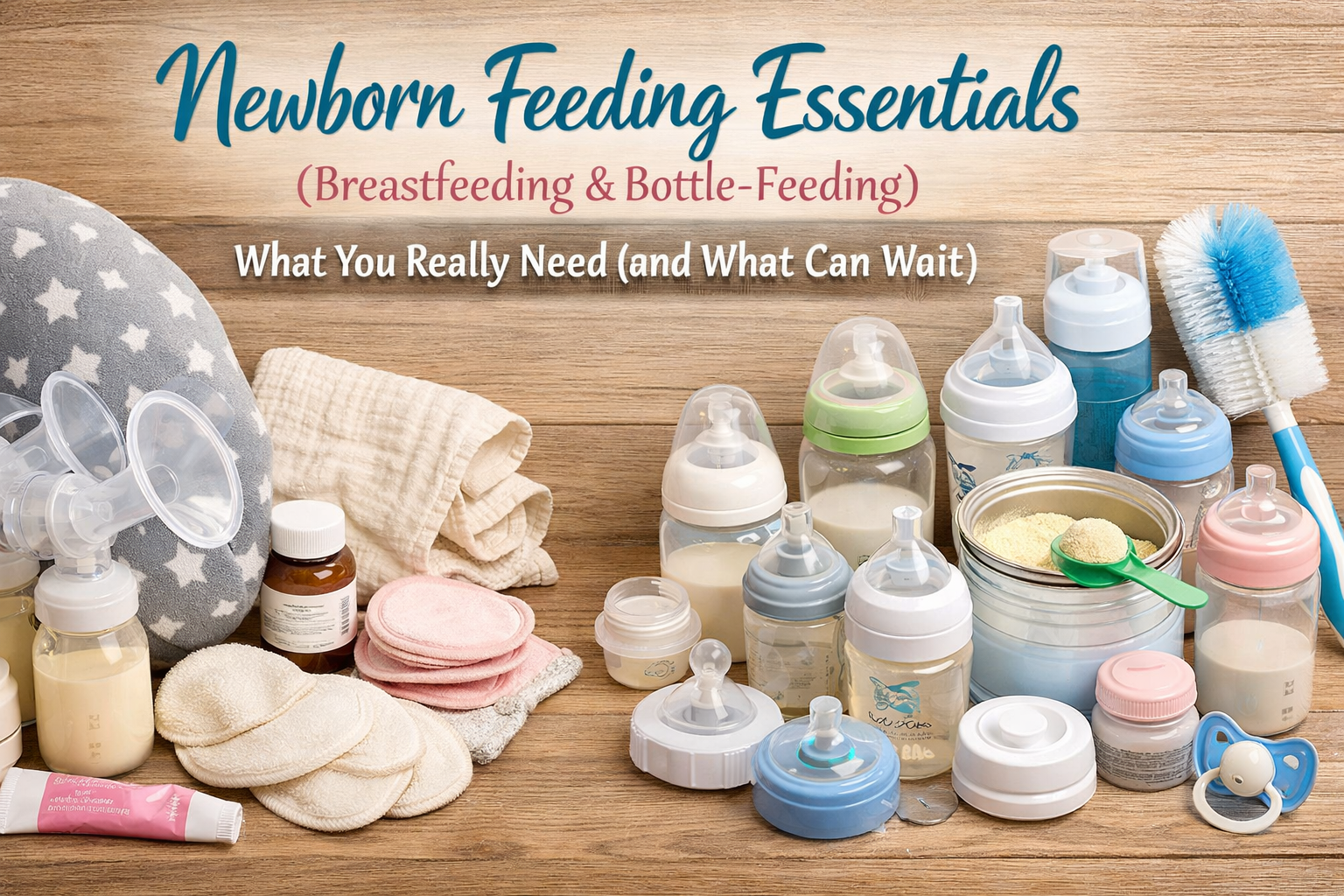
- Burp Cloths (Yes, plural. Many.): Burp cloths are the unsung heroes of newborn life. You will use them for spit-up, milk dribbles, drool, surprise messes, emergency wiping and emotional support (for you). A realistic range is 8 to 15 depending on how often you do laundry and how “spitty” your baby is.
- A Comfortable Feeding Spot (for you): This can be a couch corner, a chair, your bed (with support pillows) or anywhere you can sit safely and comfortably. You’re going to spend a lot of time feeding. Comfort matters.
- For Breastfeeding – Nursing Bras + Breast Pads (if leaking): You don’t need 12 nursing bras. But you do need something comfortable and accessible. Breast pads are useful early on if you leak (many do).
- For Bottle-Feeding – Bottles + Nipples (start small): Here’s the trap: people buy 12 bottles in one brand, then baby rejects them with strong personal conviction. Start with 2 to 4 bottles. See what baby likes. Then build your collection.
Pro tip: Look for newborn/slow-flow/natural flow nipples to reduce gulping and gas. - For Formula Feeding – Formula + Safe Water Plan: If you use formula, you’ll want a formula you trust (and baby tolerates), knowledge of how to prepare it safely (follow label and local guidance) and a plan for water (boiled/cooled or appropriate safe water per your region)
- Diapers (because feeding = output): Feeding and diapering are best friends. If baby is eating, something is happening soon.
⭐Nice-to-Haves (Helpful, Not Required)
- Nursing Pillow: This can reduce arm strain and improve positioning. Not mandatory, but many parents love it, especially if feeding sessions are long.
- Breast Pump (if pumping or planning to): If you’re exclusively breastfeeding and not pumping early, you may not need a pump immediately. But if you plan to pump, combo feed, or build flexibility, it’s useful. Also, a pump doesn’t have to be fancy to be helpful.
- Milk Storage Bags / Containers (for pumping): Useful if you plan to store milk. You don’t need 200 bags on day one, just a starter pack.
- Bottle Brush + Drying Rack: This is the practical stuff that makes cleaning easier.
- Paced Bottle Feeding Tools (slow-flow nipples): Not a “tool” exactly, but a method. Paced feeding helps baby feed more calmly and can reduce gas.
- A Simple Sterilizing Option: Depending on your comfort level and local guidance, this might be boiling, a sterilizer or microwave sterilizing bags. You don’t need a deluxe machine unless you want one.
- A Water Bottle + Snacks for You: Feeding a baby is thirsty work. And hunger appears out of nowhere. Keep a water bottle and easy snacks near your feeding station (granola bars, nuts, fruit, crackers). This is not extra. This is survival.
⛔Skip-for-Now (Save Money + Counter Space)
- A Million Bottles (before you know what baby likes): Start small. Babies are opinionated.
- Fancy Formula Machines: They look amazing. Some families love them. Many don’t need them. A simple method works just fine.
- Bottle Warmer (for most families): Nice, but not essential. Many babies take room-temp milk. Some prefer warm. You can warm bottles in a mug of warm water.
- Too Many Nipple Types and Flow Levels (at first): Start with slow-flow newborn nipples. Adjust as needed.
- Huge Pumping Stash Immediately: If you’re pumping, build your stash gradually. You’ll learn what you actually use.
- Complicated Feeding Gadgets: If something makes feeding more stressful, it’s not serving you. Keep it simple.
Breastfeeding Essentials: Practical Tips That Actually Help
A good latch is everything (and it can take practice): If breastfeeding feels painful or stressful, it’s not just “something you have to push through”. Support can help. If you can access lactation support (consultant, nurse, clinic), it can make a huge difference.
Your comfort matters: Use pillows, support your back, and adjust positions. If you’re tense, feeding feels harder.
Cluster feeding doesn’t mean failure: It’s common. It’s exhausting. It’s not automatically a supply issue.
Bottle-Feeding Essentials: Less Mess, Less Gas, More Calm
Use slow-flow nipples for newborns: Newborns can gulp quickly and get gassy. Slow-flow helps.
Try paced bottle feeding: Paced feeding means hold baby upright, keep bottle more horizontal and take short breaks. This helps reduce gas and supports a calmer feed.
Don’t stress about perfect ounces: Some feeds are bigger, some smaller. Watch baby’s cues.
Combination Feeding (Breast + Bottle):
How to Make It Smoother
Combo feeding can be a great solution. It can also feel like you’re managing two systems at once (because you are).
Helpful tips:
- keep your setup simple
- track feeds early if it helps (but don’t obsess)
- support milk supply if breastfeeding is a goal (frequent feeding/pumping can help)
- choose bottles/nipples that work well for your baby’s pace
The best combo feeding plan is the one that keeps baby fed and you functioning.
Common Newborn Feeding Challenges (and gentle solutions)
| Spit Up | Gas |
|---|---|
| Burp during and after feeds Keep baby upright after feeding for a bit Try smaller, more frequent feeds if advised | Paced feeding Burping more often Bicycle legs / gentle tummy time when awake |
If feeding feels emotionally heavy (whether breastfeeding or bottle-feeding), you’re not alone. Feeding is intense, repetitive, and deeply linked to pressure and expectations. Support matters. Rest matters. You matter.


FAQs: Newborn Feeding Essentials (Breastfeeding & Bottle-Feeding)
How often should a newborn eat?
Many newborns feed 8 to 12 times in 24 hours, sometimes more during cluster feeding.
What are the newborn feeding essentials I need most?
Burp cloths, a comfortable feeding spot, and the basics for your feeding method (nursing supplies or a small set of bottles and cleaning tools).
How many bottles do I need for a newborn?
Start with 2 to 4 bottles until you know what baby likes. Then build up based on how often you feed and how often you wash.
Do I need a bottle sterilizer?
Not always. Some families sterilize by boiling or using microwave sterilizing bags. A machine is optional, but helpful.
Do I need a breast pump right away?
Not necessarily. If you’re pumping early, combo feeding, or planning to return to work, it can be useful. If you’re exclusively breastfeeding and feeding is going well, you may wait.
What’s the difference between bottle-feeding and paced bottle feeding?
Paced feeding slows the flow, supports baby’s cues, and can reduce gas.
Is combination feeding okay?
Yes. Combo feeding is common and can be a great fit for many families.
A Friendly Reminder You Might Need Today
Feeding your baby is not a performance review. You don’t need to “win” feeding. You need to feed your baby in a way that supports your health, your family, and your sanity. Breastfeeding, bottle-feeding, combo feeding – there’s no gold medal here. Just a baby who needs nourishment and a parent who deserves support.