Sleep & Nursery Essentials (0-3 Months): What You Actually Need for a Safer, Calmer Newborn Setup
If you’re building a newborn sleep setup, you’ve probably noticed two things:
- Baby sleep advice is everywhere.
- Baby sleep advice contradicts itself like it’s a competitive sport.
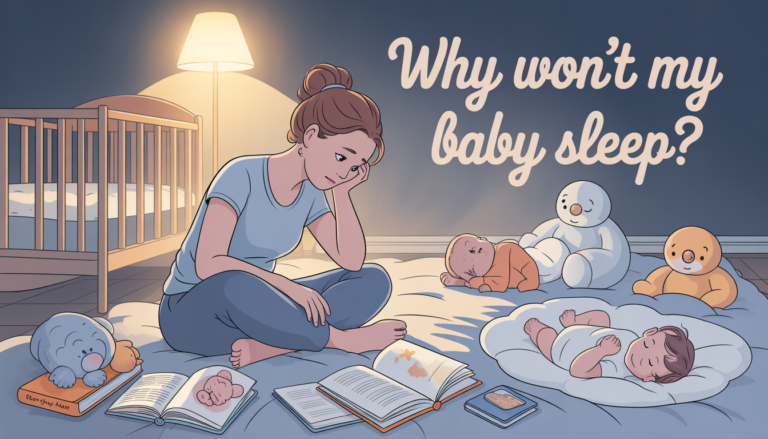
One person says your newborn “should” nap in a bright room. Another swears the room must be darker than a movie theater. Someone suggests a 12-step sleep schedule. Someone else says, “Don’t worry, newborns don’t have schedules”. And then your baby shows up and says, “Hello, I will be awake from 1:00 AM to 4:00 AM for vibes”.
So here’s the calm, realistic truth: you don’t need a fancy nursery to help your newborn sleep. You need a safe sleep space, a few essentials that reduce friction at night, and a setup that supports you through the most repetitive stage of parenting (feed, burp, change, sleep… repeat 9,000 times).
This guide covers Sleep & Nursery Essentials (0-3 months) with a practical, parent-friendly approach, must-haves, nice-to-haves, skip-for-now plus setup tips, sleep routines, and FAQs.
Newborn Sleep Basics (0–3 Months): What’s Normal (and why you’re not doing it wrong)
Newborn sleep is… chaotic. Normal things include:
- short naps (sometimes 20 to 45 minutes)
- frequent night waking (especially early on)
- day/night confusion
- “sleeping like an angel” one night and “hosting a midnight party” the next
Most newborns need to eat often, so waking overnight is expected. If you’re reading this with one eye open, you’re not alone.
How much do newborns sleep?
Many newborns sleep a lot overall, but it’s spread out in small chunks. It can feel like your baby sleeps constantly and also never sleeps at all. Both can be true.
Safe Sleep Essentials for Newborns (The foundation of your setup)
Before we talk cute nursery décor, we talk safety because safe sleep basics matter most.
Newborn safe sleep checklist (quick version)
- Baby sleeps on their back
- Sleep surface is firm and flat
- Use a crib, bassinet, or pack ’n play that meets safety standards
- Keep the sleep space clear: no pillows, loose blankets, stuffed animals, bumpers
- Dress baby in appropriate layers (sleepers + swaddle/sleep sack if used)
If you remember nothing else from this post: simple sleep spaces are safe sleep spaces.
Sleep & Nursery Essentials (0–3 Months):
Must-Haves, Nice-to-Haves, Skip-for-Now
Let’s create a setup that is functional, safe, and doesn’t require a shopping spree that feels like furnishing a tiny boutique hotel.
✅ Must-Haves (The “Start Here” List)
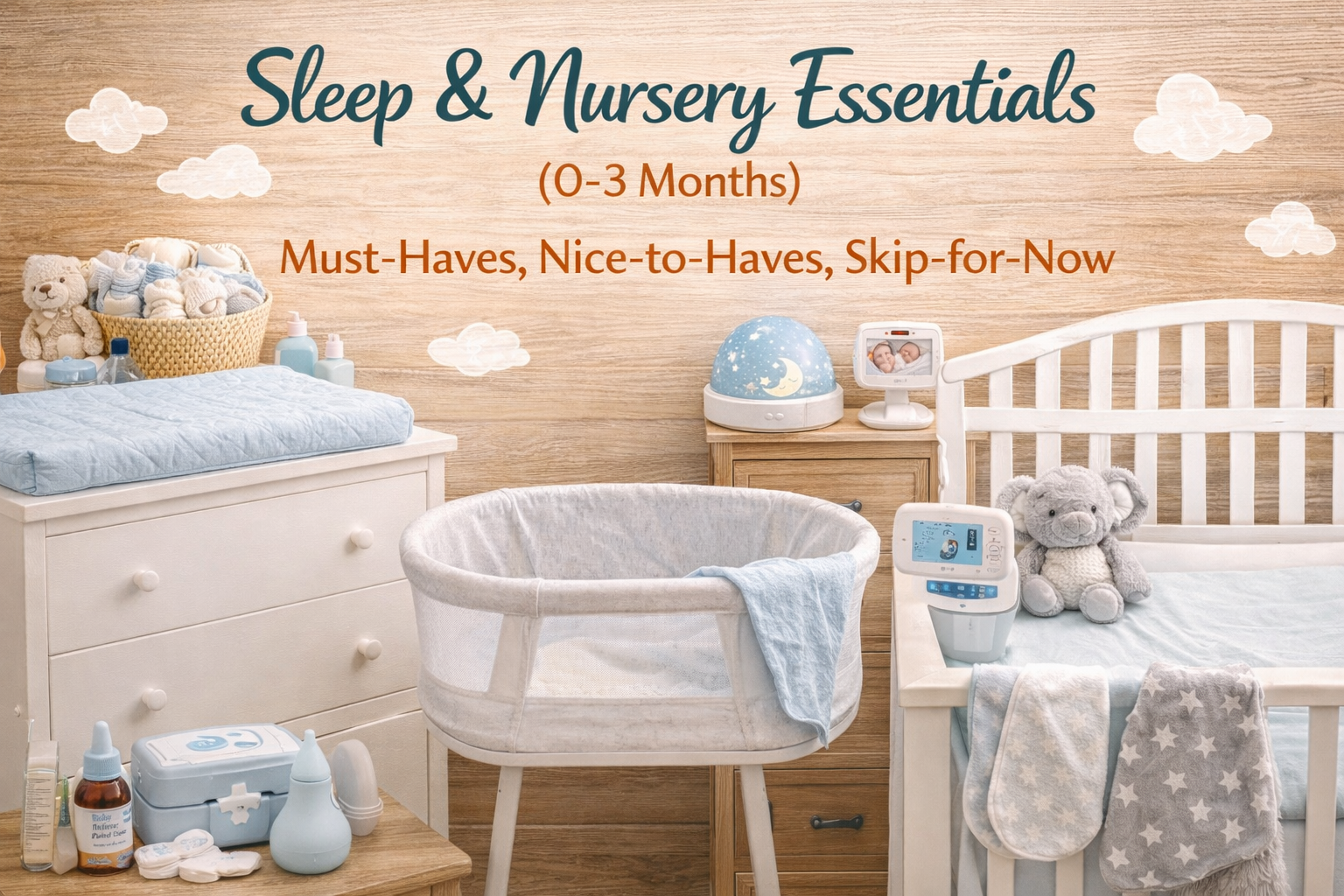
- A safe sleep space (bassinet, crib, or pack ’n play): This is the big one. Common newborn sleep options are Bassinet (popular for bedside use in early months), Crib (works from day one if you prefer) and Pack ’n play (great multi-purpose option).
What matters most: it’s firm, flat, and safe. - Firm mattress + fitted sheets (2 to 4): You will want extra sheets. Not because you’re messy, but because newborns… are newborns. Spit-up, diaper leaks, and surprise mess happen. Having 2 to 4 fitted sheets saves you from 2 AM laundry.
- Swaddle or sleep sack (depending on your baby): Swaddles can help calm newborn startle reflex. Some babies love them. Some act personally betrayed by them. Start with 2 to 4 swaddles (or newborn sleep sacks). You’ll want extras so you’re not stuck washing one daily.
- A dim night light (for nighttime feeds/changes): This is not just for aesthetics. It’s for survival. A soft night light helps you see what you’re doing, keep the room calm and avoid blasting overhead lights that fully wake everyone up.
- A safe place to put baby down in the nursery/living space: Even if baby sleeps in your room at night, having a safe “landing spot” (bassinet, crib, pack ‘n play) is useful. You need somewhere to set baby down safely while you do basic human things (like drink water).
- A simple diapering setup near sleep area: Not technically “sleep”, but essential for night flow (diapers, wipes, cream, spare sleeper, burp cloth). You want fewer steps at night.
⭐ Nice-to-Haves (Helpful Upgrades, Not Required)
- White noise machine (or white noise app): White noise can help soften household sounds and create a consistent sleep cue. Some babies love it. Some don’t care. But many parents find it helps.
- Blackout curtains (especially if daytime naps are hard): Not mandatory, but helpful if your nursery is very bright, baby naps are short and fragile or you live somewhere with late sunsets. Even “room darkening” helps.
- Rocking chair or glider (for feeding and soothing): Nice if you have space, but not required. Many parents do just fine with a couch + pillows.
- Swaddle transition items (later): You don’t need these on day one, but eventually baby transitions out of swaddles. Sleep sacks can be helpful at that stage.
- Baby monitor (especially if baby sleeps in another room): If your baby sleeps in your room early on, you may not need this immediately. If baby naps in the nursery, a monitor can be helpful.
- Sound/temperature basics: A simple room thermometer can help you avoid overheating and make layering easier.
⛔ Skip-for-Now (Save money + keep nursery calm)
Some newborn nursery items are cute but not necessary in the first 0-3 months.
- Pillows, crib bumpers, loose blankets in sleep space: These are not recommended in the newborn sleep area. Keep sleep spaces bare.
- Fancy nursery décor that crowds the sleep space: Keep it simple. Newborns don’t need a themed room to sleep. They need safety and consistency.
- Too many swaddles in 12 varieties: Start with 2 to 4. See what your baby likes. Babies are… very opinionated.
- A full toy shelf and book library (for a newborn): Adorable? Yes. Needed right now? Not really. You can build this gradually. Your baby is currently impressed by ceiling fans.
- Complex sleep gadgets: If it’s expensive and promises to “solve sleep”, be skeptical. Some tools help, but newborn sleep is mostly biology + time.
Swaddle vs Sleep Sack: What’s Best for Newborns?
| Swaddles (common in early weeks) | Sleep Sacks (wearable blanket) |
|---|
| Pros | Cons | Pros | Cons |
|---|---|---|---|
| Helps with startle reflex Can calm fussy newborns | Some babies dislike being wrapped Swaddling needs to be done safely and correctly You’ll stop swaddling once baby shows signs of rolling | Easy to use Good transition option Keeps baby warm without loose blankets | some newborns prefer swaddling early |
Practical approach: start simple, watch your baby’s response, and adjust.
Nursery Setup Tips That Actually Help (Real-Life Edition)
- Keep everything within reach: Nighttime flow matters. Set up your space so you can reach:
- diapers and wipes
- burp cloth
- spare sleeper
- swaddle/sleep sack
- Create a “night station”: A small basket near your sleep area with these. This reduces midnight scrambling.
- diapers
- wipes
- cream
- burp cloth
- pacifier (if used)
- spare onesie/sleeper
- Make the room comfortable for you: You’ll spend a lot of time in this space. Add:
- water bottle
- phone charger
- snack basket (no judgment)
Newborn Sleep Routine (Gentle, realistic, and not a strict schedule)
In the first 0-3 months, routines are less about strict timing and more about consistent cues. A simple newborn sleep routine:
- diaper change
- feed
- burp
- swaddle/sleep sack
- dim lights + white noise (optional)
- cuddle/rock briefly
- lay baby down sleepy but calm (if possible, no pressure)
Some days this works beautifully. Some days your baby says, “I hear your routine, and I decline”.
Common Newborn Sleep Challenges (and calm solutions)
| Day/night confusion | Short naps (Keep it normal) | Baby won’t sleep unless held |
|---|---|---|
| Keep daytime brighter Keep night time dim and quiet Avoid exciting play at night | Contact naps sometimes (safe and supervised) White noise Dark room Consistent cues | Also common. You’re not spoiling your newborn. You’re meeting a need. This gets easier over time. |
Sleep & Nursery Essentials Checklist (Copy/Paste Friendly)
Must-haves
- safe sleep space (bassinet/crib/pack ’n play)
- firm mattress + fitted sheets (2-4)
- swaddles or sleep sacks (2-4)
- dim night light
- simple diapering station near sleep area
- safe place to put baby down
Nice-to-haves
- white noise machine/app
- blackout curtains
- rocking chair/glider
- baby monitor (if baby sleeps in another room)
- room thermometer
Skip-for-now
- big toy/book setup (build over time)
- loose blankets, pillows, bumpers in sleep space
- overcrowded décor near sleep area
- too many swaddle styles before you know what works
- complex “sleep-solving” gadgets


FAQs: Sleep & Nursery Essentials (0-3 Months)
What are the most important newborn sleep essentials?
A safe sleep space with a firm, flat surface, fitted sheets, and a swaddle or sleep sack (if used), plus a night light for nighttime care.
Do I need a nursery for a newborn?
No. Many newborns sleep in the parents’ room early on. You just need a safe sleep space and a simple setup.
Swaddle vs sleep sack: which is better?
Many newborns do well with swaddles early on, then transition to sleep sacks. The best choice depends on your baby and safe use.
How many crib sheets do I need?
Most families do well with 2 to 4 fitted sheets for quick changes.
Is a white noise machine necessary?
Not required, but many parents find it helpful for creating consistent sleep cues and reducing noise disruptions.
Do I need blackout curtains?
Not mandatory, but helpful if your room is bright and naps are short.
A Kind Reminder (Because Sleep Deprivation Is Real)
If you’re reading this while googling “how to get newborn to sleep” for the 19th time today, I want you to know: newborn sleep is not a test you’re failing. It’s a season you’re surviving. You don’t need a perfect nursery. You don’t need every sleep gadget on the internet. You need a safe setup, a simple routine and permission to keep things easy.